

Students at the Kwame Nkrumah University of Science and Technology, Kumasi (KNUST), have been urged to pay greater attention to how they speak and write, with university officials and communication experts saying effective communication can influence academic performance and future career prospects.
The message was delivered during the DoSA-WiSTEM Housekeeping Hangout, organised by the Directorate of Student Affairs (DoSA) and hosted by the College of Humanities and Social Sciences (CoHSS) under the theme, "What You Say Matters: Communication for Academic Success."

The programme, led by Dr. Nora K. Nonterah and Dr. Levina N. Abunya, brought together students, university leaders and faculty members to discuss communication, student support and academic development.
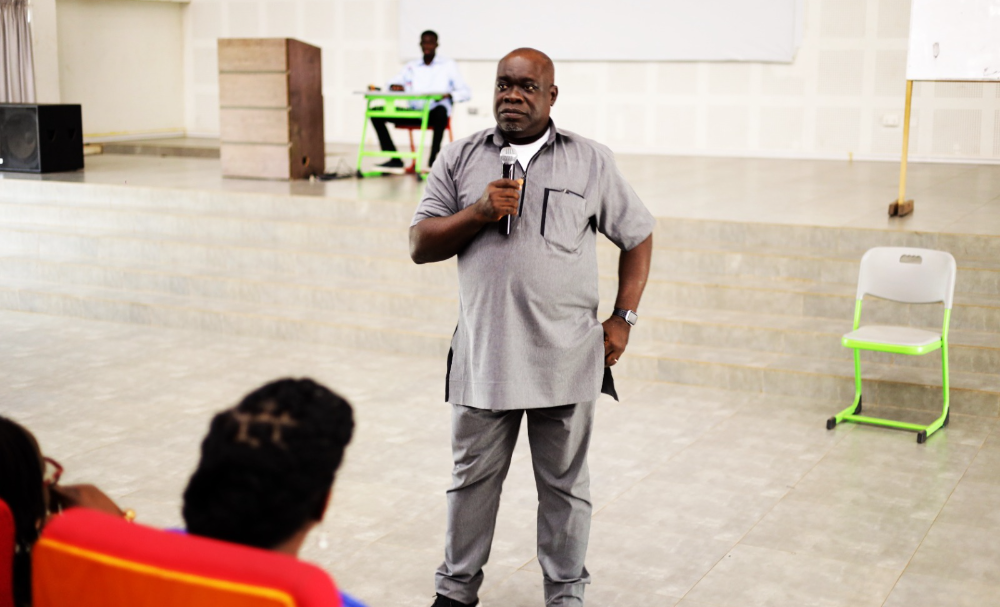
Among those present were the Provost of CoHSS, Professor Charles Ofosu Marfo; the Director of Student Affairs, Professor Marian Asantewah Nkansah; the Deputy Registrar at DoSA, Mrs. Victoria De-Graft Adjei; and Dr. (Mrs.) Victoria Ogunnike Faleke, Senior Lecturer at the Department of Language and Communication Sciences, who delivered the keynote presentation.
Opening the session, Mrs. Victoria De-Graft Adjei, Deputy Registrar at the Directorate of Student Affairs, told students that communication extends beyond speaking and writing, noting that every action conveys a message.
"All communication must be inherently strategic because it is the foundation of how we connect, influence and make sense of the world around us," she said.
"We have to be strategic. That is why we don't take communication lightly. Whatever you do, your actions and inactions communicate... Effective communication is always positive."
Speaking on the theme, Dr. Victoria Ogunnike Faleke said communication begins long before formal education and remains central throughout a person's life.
She explained that children first learn communication within their families and communities before developing formal communication skills through education.
"Education is the bedrock of every society," she said, adding that both formal and informal education enable people to function effectively in society.
Dr. Faleke told students that effective communication goes beyond speaking and includes writing formal emails, listening attentively and understanding messages before responding.
"There is a format you have to go through if you write," she said, explaining the need to address letters and emails correctly.
She warned that poor communication could affect opportunities beyond the classroom.
"The one who stands out is the one who communicates clearly either in writing or verbally," she said. "This will eventually show in your class presentations, job interviews and even emails you send to lecturers."
Dr. Faleke also encouraged students to become better listeners, saying active listening strengthens relationships and reduces conflict by minimising misunderstanding.
The Director of Student Affairs, Professor Marian Asantewah Nkansah, said the Housekeeping Hangout was introduced to provide students with opportunities to engage with the University beyond orientation activities.
She said the initiative emerged from discussions with the then Vice-Chancellor, Professor Rita Akosua Dickson, on creating additional platforms for students to develop essential life skills during their time at KNUST.
"KNUST owes you more than these spaces to enrich your student experience and equip you with skills that are needed for life," she said.
Professor Nkansah said the first Housekeeping Hangout was held in April 2023 and has since expanded to colleges across the University.
She urged students to practise speaking English in academic settings, noting that it is the language of instruction and assessment at KNUST.
"You are not going to write your exams in Twi," she said. "If you don't begin to think in English, you will be thinking in the exam room."
Professor Charles Ofosu Marfo encouraged students to take advantage of such programmes rather than limiting their learning to the classroom.
"I get worried when students don't take advantage of programmes like this," he said. "The skills shared here are the things that are supposed to make you better."
The programme concluded with an interactive question-and-answer session.
One student asked whether personal issues shared with lecturers or counsellors would remain confidential.
Responding, the organisers assured students that lecturers, counsellors and university administrators are bound by professional ethics and do not disclose personal information entrusted to them.
"We are professionals," one of the facilitators said. "Please don't suffer in silence."


